760-632-1304 [email protected]

Advanced Laser Endodontic Therapy – What is it?

In the vast majority of cases, root canals are caused by infections, and the bacteria that cause root canal infections are difficult to remove completely once they get into the tooth and the bone around the tooth.

When teeth get infected the tubules get filled with bacteria and traditional root canal therapy doesn’t have an effective way of dealing with the bacteria in the tubules of the root.

Advanced Laser Endodontic Therapy (ALET) successfully addresses the two major disadvantages of traditional root canal therapy: the inability to clean and sanitize anatomically complex root-canal systems and to deeply disinfect dentinal walls and tubules.

Why is ALET Superior to Classical Root Canal Therapy?

Root canal system of a molarThere is no way classical root canal therapy can completely clean all the infection present in the root canals of a tooth.  Dentists usually think that it is enough to fill the main canal of the tooth and their job is done.  They can get a really good result for the main canal and miss the sometimes myriad of lateral, accessory and anastomoses (connectors) within the canal system of teeth.

The problem is the tools dentists have had available to them are not efficient and don’t remove all of the bacteria and infected, necrotic tissue inside the tooth.  You have all heard of the adage, ‘Use the right tool for the job.’  Root canals traditionally have been done with small hand files (pictured below).  Up till now, these have been the primary instruments available to do root canals and try to remove the necrotic tissue inside the tooth.  Now there is another way, more on this later.

How the Procedure is Usually Done

Files used to remove infection from root canalsHere is a picture of the files dentists use during root canal therapy.  While hand files do a pretty good job of removing bacteria and infection from the main canal of the tooth, they do a poor job of removing the infected tissue in the other canals present in the root canal system.  The simple reason for this is that these files cannot reach these canals.

Imagine for a moment using one of the files to the left and trying to clean out the curved canals and channels in the tooth imaged above.  First of all, it is anatomically impossible for these files to reach all the canals present.  Secondly, the shape of the file does not match the shape of the canals present in teeth.  Rarely if ever does a tooth canal present as a relatively perfect cylinder, oval or circle.  Most canals turn and curve like a river, making it virtually impossible to navigate with these files.  It’s the way of nature.

Dentinal Tubules in toothThe third reason classical endodontics (root canal treatment) doesn’t always work is the microtubules of the roots.  Here is an electron microscope image of the root surface of a tooth.  See all the tiny holes?  These are microtubules which usually carry micronutrients into the tooth and house immune cells and odontoblasts that can lay down more tooth structure when necessary.   When laid down side by side, the microtubules will span a distance of 1-2 miles.  That is a lot of tubules!

In Weston Price’s groundbreaking research done a century ago and George Meinig’s book, ‘The Root Canal Cover-Up,’ it was postulated that the microtubules were actually filled with bacteria and contributing to the body burden of toxicity in your body.


ere is another image of microtubules, now filled with bacteria after a tooth becomes infected.  The reason this is important is that the metabolic byproducts of bacteria (essentially ‘bacteria poop’) is toxic to our bodies.  Some people with immune compromised conditions shouldn’t have root canal procedures done because of the additional stress it will put on an already taxed and stressed immune condition. Many patients with auto Immune conditions, fibromyalgia or Lyme disease cannot tolerate  root canals.  For more information on systemic inflammation and root canals go to this article on the importance of checking certain blood markers before major dental work:  Inflammation May Cause Failure in Extractions, Root Canals and Implants: A Case Study

To quote what the Journal of Endodontics (printed by the American Association of Endodontists) has stated about root canals performed with four different nickel /titanium file systems. ‘All instrumentation techniques left 35% or more of the canals’ surface area unchanged. Whilst there were significant differences between the three canal types investigated, very few differences were found with respect to instrument types.’ (1)

Possibly leaving 35% of the tooth surface untouched after root canal therapy is a staggering thought. Imagine doing a root canal at your local dentist because you have an infected tooth and being told you’re good to go, even though that the dentist was only able to clean 65% of your tooth. Would you consider that a success? No wonder root canals fail as often as they do. It’s because bacteria is still left behind to fester in your tooth!

Introducing Advanced Laser Endodontic Therapy

Thankfully, a treatment protocol has recently been developed that solves the two deficiencies of traditional endodontics mentioned above. Using the SWEEPS modes of the Fotona Erbium laser, virtually all the bacteria present in infected teeth is eliminated.  Let’s see how it works:

Fast, effective and minimally invasive treatments

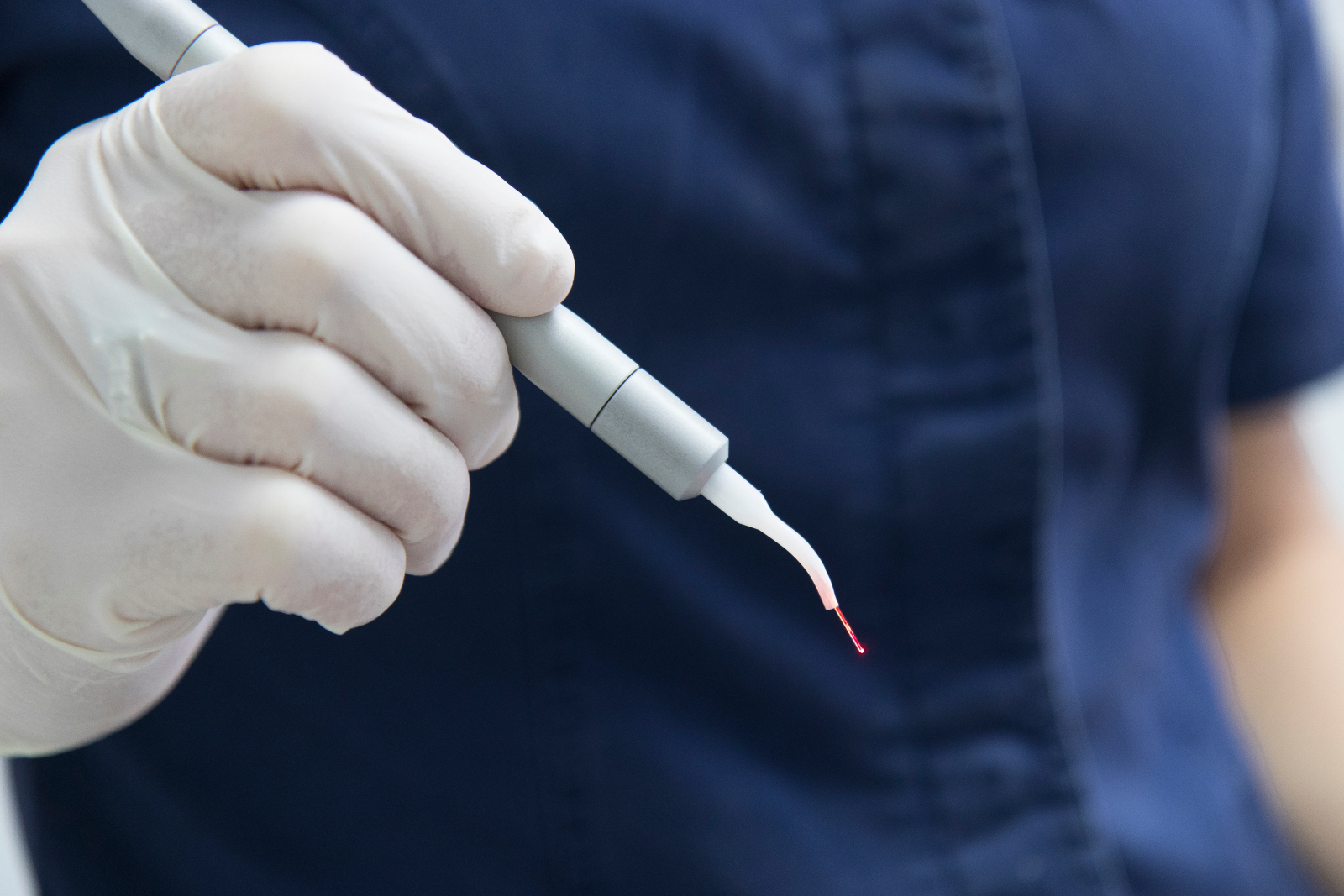
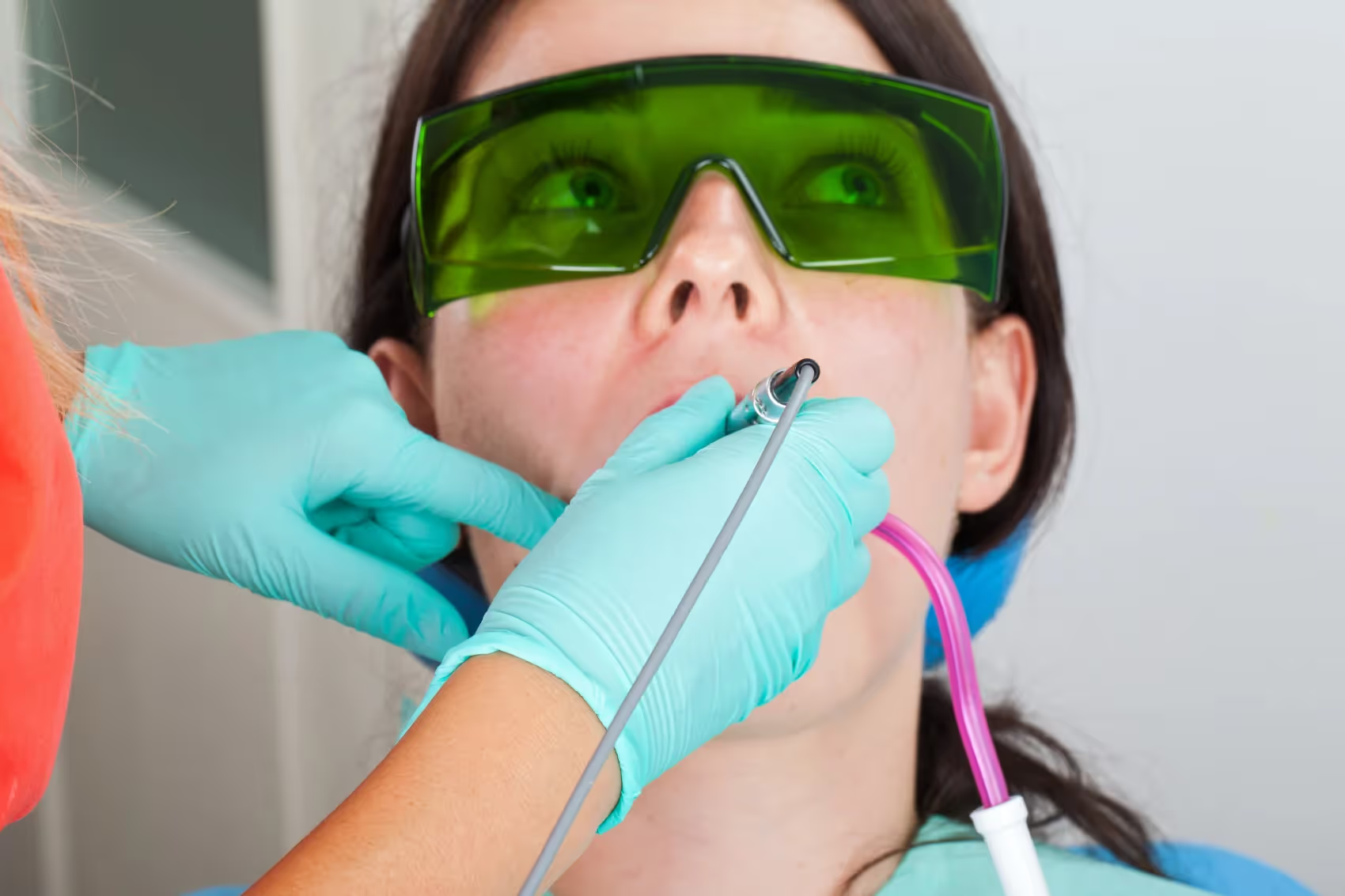
  • During Advanced Laser Endodontic Therapy (ALET for short) an Erbium laser uses a unique photoacoustic streaming method to create non-heat producing photoacoustic waves.  Following this, the canals and sub-canals are left clean and the dentinal tubules are free of contamination and debris.
  • In the second step, the antibacterial and oxygenating properties of ozone flush out and penetrate into the microtubules of the tooth.  Research has shown that ozone is more effective at killing bacteria than even bleach, which is the traditional solution dentists use to kill bacteria during root canal therapy.
  • At the end of treatment, an Nd:YAG laser wavelength is utilized to create bio-stimulation that helps to heal the gums and bone around the tooth.

    A game changer in root canal therapy

    tubules in root canalTake a look at the electron microscope images in this graphic.  On the image to the left, you see the bacteria that usually gets embedded into the microtubules of the tooth root after a tooth gets infected and needs a root canal.  On the second image, you see the microtubules after treatment with the Fotona laser in PIPS mode.  There are NO MORE BACTERIA in the tubules of the root!

    Before now, we couldn’t be sure how much bacteria we were leaving behind when we did a root canal on a tooth.  How would you know, as you can’t see them on x-rays?  However, with the use of electron microscopy, we can actually show the microtubules and the fact that they are devoid of bacteria after using PIPS during root canal therapy.

    This is absolutely a game changer and a paradigm shift in dentistry, in my opinion. As a practicing dentist, I don’t think I have seen a more important development to resolve infections in the mouth. This is why I am so excited about this laser and specifically the SWEEPS modes to remove bacteria from infected teeth.  I think that Weston Price as well as George Meinig, if they were alive today, would be as excited about this technology as I am.

    Why SWEEPS are perfect for healing root canals infections

    OK, for the geeks out there like me who want to hear more about the technical stuff here goes:  In SWEEPS mode, the laser operates on a super-short 50-microsecond pulse duration.  This combined with the specific design of the Erbium tip allows for the lowest possible energy per pulse and repetition rate.  This minimizes thermal effects and maximizes the propagation of the photon-induced photoacoustic shock waves on a microscopic level.

    Conclusion

    SWEEPS is a revolutionary laser frequency for cleaning and disinfecting the root canal system, more advanced than even the PIPS technology. The strategy of using SWEEPS when combined with traditional irrigation as well as ozone water has the potential to fully heal previously unhealthy and infected teeth. Once we eliminate the bacteria in the tooth, the body can still maintain a biological connection with the tooth through the periodontal ligament.

    If you are local to San Diego, call the office at 760-632-1304 to evaluate whether SWEEPS would help you. To read more about laser root canals, here is another article on the subject:  Should I Treat My Root Canal Infection or Extract My Tooth. 


    Reference:

    1. Root Canal Preparation with a Novel Nickel-Titanium Instrument Evaluated with Micro-computed Tomography: Canal Surface Preparation over Time; Ove A. Peters, DMD, MS, PhD,* Claudia Boessler, DDS,† and Frank Paque´, Dr med dent†: Int Endod J. 2001 Apr;34(3):221-30.

    Frequently Asked Questions

    What is Advanced Laser Endodontic Therapy (ALET)?

    ALET is an innovative approach to root canal therapy, made possible through advances in technology and a bio-friendly new protocol.
    It uses specialized rinses, ozone, and a dual Erbium/NdYAG laser to sterilize and sanitize the canals and tubules of the tooth and to stimulate healing.

    Why haven’t I heard of this before? Why aren’t other root canal specialists doing this?

    While the Fotona laser has been used effectively for about a decade, the specific protocol currently employed by Dr. Evans is only a few years old.
    Most dentists simply haven’t heard of it yet!

    Why is this different from traditional root canal procedures?

    Traditional endodontic therapy cannot fully sanitize and sterilize the complex root canal system in most teeth, let alone reach the myriad of microtubules in the roots.
    For more on this, see the interview with Dr. Mercola.

    Won’t I still have a “dead tooth” in my mouth?

    The tooth isn’t “dead.” Although the canals are filled with inert material after root canal therapy, the ligament around the tooth is still viable and vital.
    This ligament provides blood flow, nerve signals, and serves as a shock absorber. As long as this ligament is viable, the tooth retains its biological connection to the body.

    How are appointments sequenced for my ALET treatment?

    On the first visit, you will see our specialist, who will open the canals and clear out the infection.
    This visit will be coordinated with a visit to Dr. Evans for the SWEEPS protocol to remove bacteria and biofilm from the canals and tubules.
    After a healing period, you will return to the specialist to complete the root canal procedure.

    Will I still need a crown? What if I already have a crown?

    If you already have a crown, Dr. Evans may be able to go through it from the biting surface and maintain it by sealing it. Otherwise, you will likely need a new crown.
    Each case is different.

    I read about Weston Price’s work with rabbits and George Meinig’s book on root canals. What about that?

    Price’s research and Meinig’s book concluded that it’s impossible to reach all the canals in a root canal system and open up the millions of microtubules in the roots.
    However, with the Fotona laser, ozone, and chelators like EDTA, we can remove the bacteria and endotoxins associated with them.
    Dr. Evans’ position is that the body doesn’t have a problem with the tooth as long as you can remove all the bacteria. With the ALET protocol, now you can.
    Technology has changed a lot since Price and Meinig!